Stability types, maneuverability & controllability
Stability: aircraft tendency to return to trimmed flight after a disturbance.
Inherent stability: built-in quality to correct disturbances and return to, or continue on, original flight path. Primarily a design characteristic (PHAK ch.5).
| Type | Meaning |
|---|---|
| Static | Initial tendency to return to trim |
| Dynamic | Motion over time: damped (settles down), oscillating, or divergent (gets worse) |
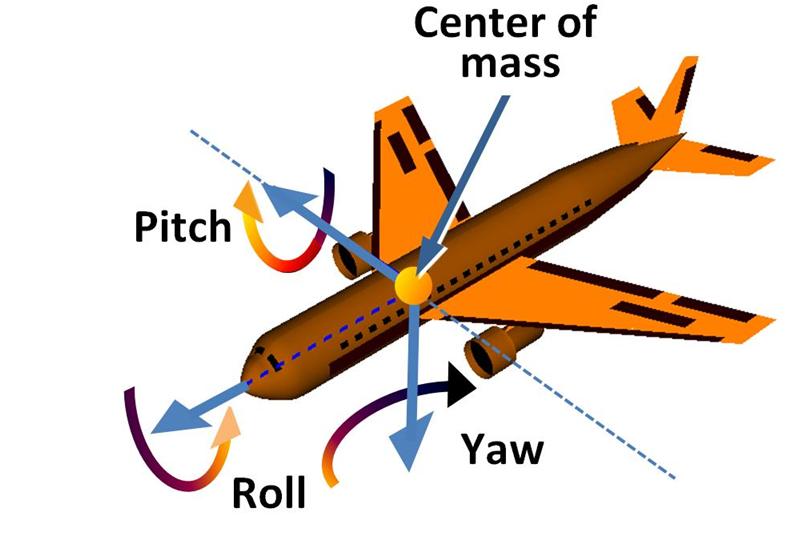
Judged about pitch, roll, yaw axes.
Static stability types (PHAK ch.5). Hands-off test: trim hands-off in level flight, give brief nose-down push.
| Type | Response | Oscillations after push |
|---|---|---|
| Positive | Returns to original equilibrium | Gradually cease |
| Neutral | Stays in new equilibrium | Continue unevenly |
| Negative (unstable) | Keeps diverging | Increase |
Not stability (PHAK ch.5):
- Maneuverability: quality of withstanding maneuver stresses. Set by weight, inertia, control size/location, structure, powerplant.
- Controllability: aircraft response to pilot control input. Independent of stability.
Trap: uneven, non-growing oscillations are neutral, not unstable; controllability is not a stability property.
References
- TP 1102 (Flight Training Manual)
- PHAK ch.5, Ground Effect
- PHAK ch.5, Longitudinal Stability (Pitching)